Choosing a neighborhood in Kaysville is not just about picking a spot on a map. It is about deciding what kind of daily rhythm fits you best, from historic streets near the original townsite to newer communities with planned layouts, open space, and trail access. If you are trying to narrow your options, this guide will help you understand how Kaysville’s neighborhoods differ and what to pay attention to as you search. Let’s dive in.
How Kaysville’s neighborhoods took shape
Kaysville was settled in 1850 and incorporated on March 15, 1868, making it the first incorporated city in Davis County. The original fort and townsite covered about 15 square blocks, roughly between today’s Main Street and 600 West, and 200 North and 100 South. That early footprint still helps explain why some parts of Kaysville feel more rooted in history while others feel newer and more planned.
Today, the city still describes itself as having an iconic Main Street, a somewhat rural lifestyle, and convenient access by I-15, Highway 89, and 200 North. Kaysville’s 2022 General Plan, later amended in 2025 to add water-use planning, also signals that growth and neighborhood form remain active local issues. For buyers and sellers, that means neighborhood character matters, and so does understanding how the city continues to evolve.
Historic streets in old Kaysville
Some of Kaysville’s most distinctive areas are tied to the original townsite and older streets near the city core. The city’s zoning code separates the R-T Old Kaysville Townsite Residential District from the broader R-1 single-family district, and the Historic Preservation Commission is specifically tasked with preserving and protecting historic areas and sites. That is a strong official clue that older Kaysville deserves its own category.
If you are drawn to historic areas, you will likely notice a different feel here than in later subdivision neighborhoods. Older streets can include homes with late-Victorian and turn-of-the-century influences, brick construction, ornamented details, and more individually sited lots. Instead of a uniform, repeatable subdivision pattern, these areas tend to feel more layered and one-of-a-kind.
Representative homes help show that character. The Henry Blood House at 95 South 300 West dates to about 1896 and is described as a Queen Anne house on a 1-acre parcel. The Thomas J. and Amanda N. Smith House at 472 North Main dates to about 1901 and is a Victorian Eclectic brick house with Queen Anne elements.
What to expect in older neighborhoods
Older Kaysville streets are best understood as varied rather than identical. Some buyers expect every historic area to have oversized lots or the same home style, but that is not how Kaysville reads on the ground. Even within city zoning, lot standards differ across districts, so it is smart to stay flexible when comparing one older block to another.
One residential district requires a minimum lot area of 8,000 square feet with a 70-foot minimum width, while other residential and agricultural districts call for larger minimums such as 21,780 or 40,000 square feet. In practical terms, that means historic Kaysville is not one single pattern. You may find differences in spacing, lot depth, yard size, and the way homes sit on the street.
For buyers, that can be a plus. If you want character, mature surroundings, and a less uniform streetscape, the older core may be worth a closer look. For sellers, that same individuality can become an important part of how your home is positioned in the market.
Newer communities in Kaysville
On the other side of the neighborhood spectrum, newer Kaysville communities tend to feel more planned in their layout. Recent subdivision notices show this clearly. In newer areas, the street pattern, lot arrangement, and shared spaces often create a more consistent neighborhood experience from one home to the next.
Encore Estates at 367 South Angel Street offers a useful example. This 8.53-acre R-1-14 subdivision was planned for 16 lots ranging from 13,922 to 33,245 square feet, with a public road extending through the property to Willow Brook Lane. A Mountain Vistas phase plat shows a similar lot-size spread, which suggests newer supply in Kaysville is planned and organized, but still not especially tight-lot by suburban standards.
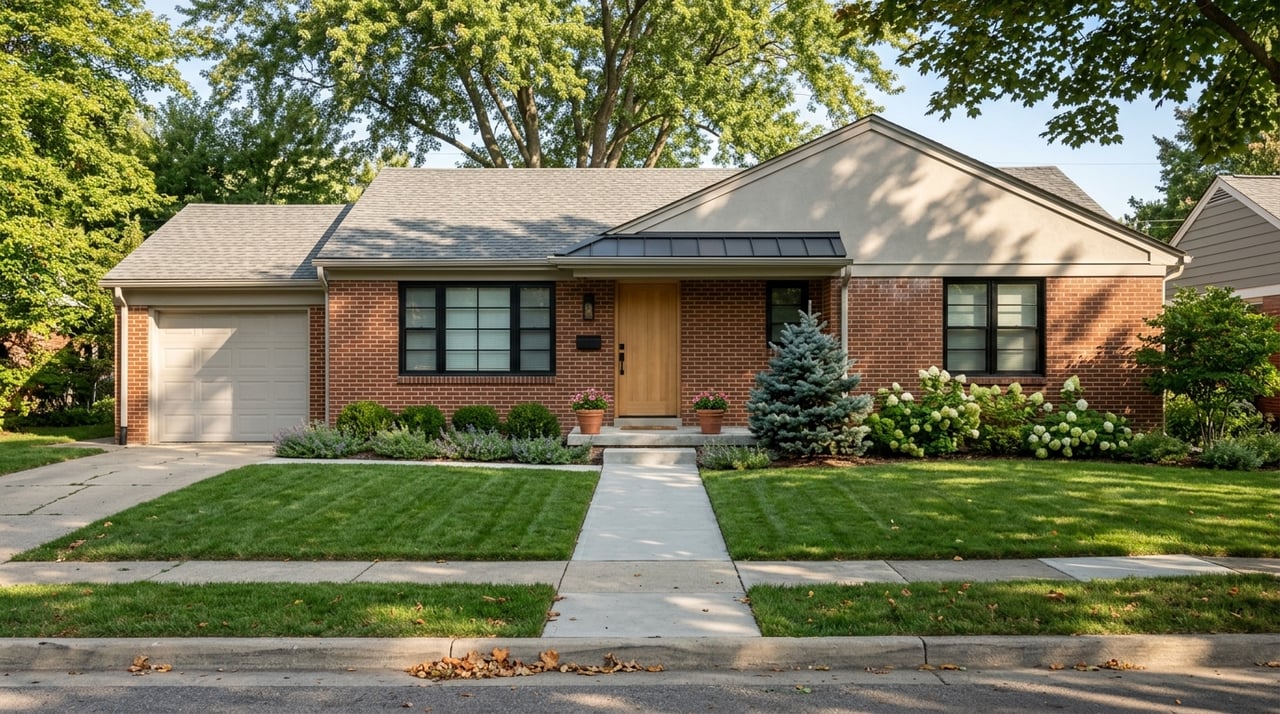
Because city plat documents focus on geometry, setbacks, and easements rather than facade labels, the safest way to describe these areas is with terms like contemporary single-family homes or modern subdivision homes. That does not mean every home looks the same. It means the neighborhood pattern is more structured, with a clearer subdivision identity than you often see in the old core.
What newer areas often offer
Many newer neighborhood pockets in Kaysville also connect daily life to shared amenities and open space. That can matter if you want easy access to walking routes, playgrounds, or neighborhood parks without having to drive across town. In these areas, the neighborhood experience may feel more linked to trails, parks, and internal community layout.
Quail Crossing Park is a good example of that pattern. Located at about 194 East 2300 South, it was originally developed as part of an HOA community and later donated to the city in 2014. The city says it now includes an updated small playground, picnic shelters, and a walking and biking trail.
That kind of setup gives newer communities a different kind of appeal. Instead of leading with historic architecture or original townsite roots, they often lead with convenience, organized streets, and access to everyday outdoor amenities.
Parks and trails shape daily life
No matter which part of Kaysville you are considering, parks and trails play a big role in how a neighborhood feels. The city highlights Barnes Park, Heritage Park, Hess Farms Park, Hods Hollow, Pioneer Park, Ponds Park, Quail Crossing Park, and Wilderness Park as part of its parks and facilities system. These places help connect neighborhood choice to real day-to-day use.
Barnes Memorial Park is described by the city as a place to walk by the creek. Wilderness Park stands out in a different way, with a 140-acre trail network for mountain biking, hiking, cross-country skiing, and snowshoeing. The city also notes that a new Bonneville Shoreline Trail trailhead with parking and restrooms opened at Wilderness Park at 1625 E 650 N.
For many buyers, this is where the neighborhood search becomes more practical. You are not only comparing homes. You are comparing routines like morning walks, weekend trail time, playground access, and how quickly you can get to the outdoor spaces you will actually use.
Trail-linked pockets across the city
Kaysville’s official trail map adds even more texture to the neighborhood conversation. It names routes and walkways tied to recognizable places, including Schick Farm, Pheasantbrook, Angel Street Soccer Complex, Mountain Vistas, RailTrail, Quail Hollow at Willowmere, Old Mill Village, USU Botanical Gardens, Rotary Club Walkway, Kaysville Cemetery, East Mountain Wilderness Park, Quail Crossing, Creekside Cut-Off, Barnes Memorial Park and Wendell Snowball Sportsplex, and a proposed 200 North Urban Trail.
Listed distances range from 0.02 miles to 5.00 miles. That means access can vary from short neighborhood connectors to more substantial routes. If you want a neighborhood that feels trail-linked and amenity-driven, these mapped systems are a meaningful part of the story.
Historic core or newer pocket?
For most buyers, the biggest difference in Kaysville neighborhoods is experiential. The older core feels more historic and Main Street-centered, while newer pockets feel more subdivision-oriented, trail-linked, and amenity-driven. Neither is automatically better. It depends on what matters most to you.
If you like architectural character, a less uniform streetscape, and ties to the city’s earliest history, you may be more drawn to old Kaysville. If you prefer planned layouts, contemporary single-family homes, and neighborhood open space, a newer community may be a better fit. The right choice often comes down to how you want your home, street, and surroundings to work together.
Tips for choosing the right Kaysville neighborhood
As you compare neighborhoods, it helps to focus on your real priorities instead of broad assumptions. A few practical questions can make your search much clearer:
- Do you want a home with historic character or a more modern subdivision setting?
- How important is proximity to Main Street, parks, or trail connections?
- Do you prefer a more varied streetscape or a more uniform neighborhood layout?
- Are lot size and yard configuration major decision points for your household?
- How important is commuter access to I-15, Highway 89, or 200 North?
If you are selling in Kaysville, these same points matter when positioning your home. A historic-area property and a newer subdivision home may both be desirable, but they usually appeal to buyers for different reasons. Clear neighborhood context helps buyers understand that value.
Kaysville offers more variety than many people expect at first glance. From original townsite streets to newer planned communities, the city gives you distinct ways to live, move, and connect to the area. If you want help sorting through which neighborhood lines up best with your goals, Doxey Real Estate Group can help you compare options with practical local insight.
FAQs
What makes historic neighborhoods in Kaysville different from newer communities?
- Historic neighborhoods in Kaysville are generally tied to the original townsite and tend to feel more Main Street-centered, varied, and individually sited, while newer communities usually feel more planned, subdivision-oriented, and connected to shared amenities or trails.
Are lot sizes the same across Kaysville neighborhoods?
- No. Kaysville has different zoning districts with different minimum lot standards, including examples such as 8,000 square feet in one residential district and larger minimums like 21,780 or 40,000 square feet in other districts.
What are some examples of historic homes in Kaysville?
- Examples include the Henry Blood House at 95 South 300 West, a c.1896 Queen Anne house, and the Thomas J. and Amanda N. Smith House at 472 North Main, a c.1901 Victorian Eclectic brick house with Queen Anne elements.
What defines newer neighborhoods in Kaysville?
- Newer neighborhoods in Kaysville are often defined by planned subdivision layouts, organized lot patterns, contemporary single-family homes, and access to neighborhood parks, trails, or shared open space.
Are there parks and trails near Kaysville neighborhoods?
- Yes. The city highlights parks and facilities such as Barnes Park, Heritage Park, Hess Farms Park, Hods Hollow, Pioneer Park, Ponds Park, Quail Crossing Park, and Wilderness Park, along with trail systems tied to many neighborhood areas.
How can you choose the right neighborhood in Kaysville?
- Start by comparing the lifestyle feel you want, such as historic character versus newer subdivision layout, along with access to trails, parks, commuting routes, lot size, and the type of home setting that best fits your daily routine.